
Semliner Knowledge Hub

Practical Logistics Insight for Smarter Trade Decisions

Explore concise guidance on customs updates, freight planning, cargo movement, and supply chain operations across Uganda and East & Central Africa.

Customs Clearance Notes Freight & Route Planning ASYCUDA & Documentation Warehousing Efficiency Import-Export Compliance Regional Supply Chain Strategy

Insights & Articles

Long-form logistics thinking for East and Central African trade.

Browse concise article summaries, then expand any card to read the full essay inline.

Import documentation and customs paperwork

How to Prepare Import Documents Without Delays

A practical guide to organizing declarations, invoices, and supporting documents before cargo reaches the border.

Read full article

Strong import preparation starts before cargo even moves. Businesses that wait until a shipment is already in transit often create pressure around customs review, missing documentation, and avoidable delays. A better approach is to treat documentation as part of the shipment plan, not as an afterthought.

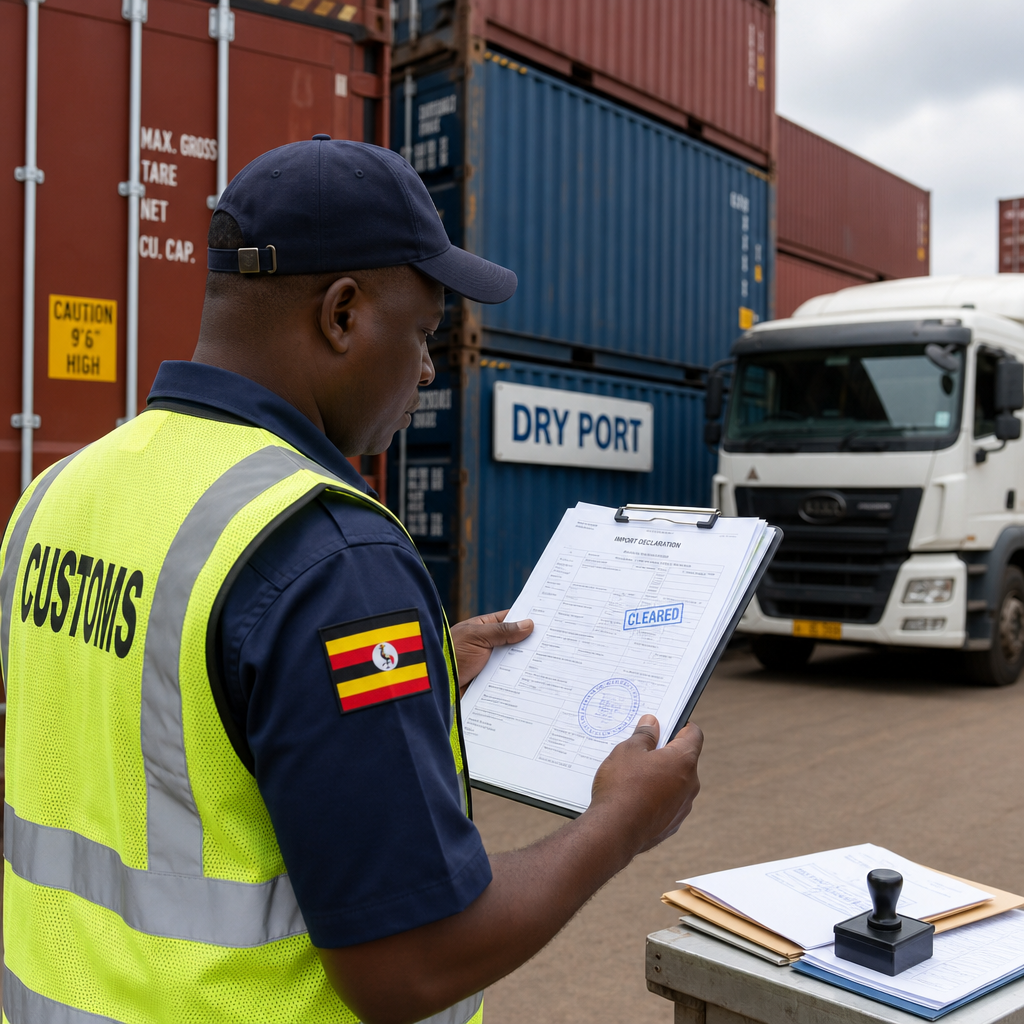
Begin with a complete file for every shipment: commercial invoice, packing list, transport reference, applicable permits, and any supporting compliance documents relevant to the goods. Each document should match the others on product descriptions, quantities, values, and consignee details. Small inconsistencies can create unnecessary checks that slow release.

It is also helpful to prepare an internal checklist before submission so teams confirm that names, codes, and declared values are aligned. Once documents are organized, communication matters just as much as paperwork. Share key references early with your logistics partner, confirm whether any product-specific approvals are required, and verify expected timing for submission.

If a business regularly imports similar goods, it should standardize recurring documentation practices so each new shipment starts from a clearer template. This reduces dependence on last-minute corrections and improves confidence during customs processing. Better preparation does not remove every possible delay, but it greatly reduces preventable ones. In busy trade environments, organized documentation often becomes the difference between smooth release and expensive waiting time.

Freight forwarding options - sea, air, and road transport

Freight Forwarding Choices: Sea, Air, or Road?

A simple decision framework for choosing the most practical shipping mode based on urgency, cost, and cargo flow.

Read full article

Choosing the right freight mode is not only about price. It is about matching the movement method to the business objective behind the shipment. Air freight is often the best fit when urgency is the top priority, especially for high-value or time-sensitive cargo. However, speed comes at a premium, so it should be reserved for situations where lead time truly affects operations or customer commitments.

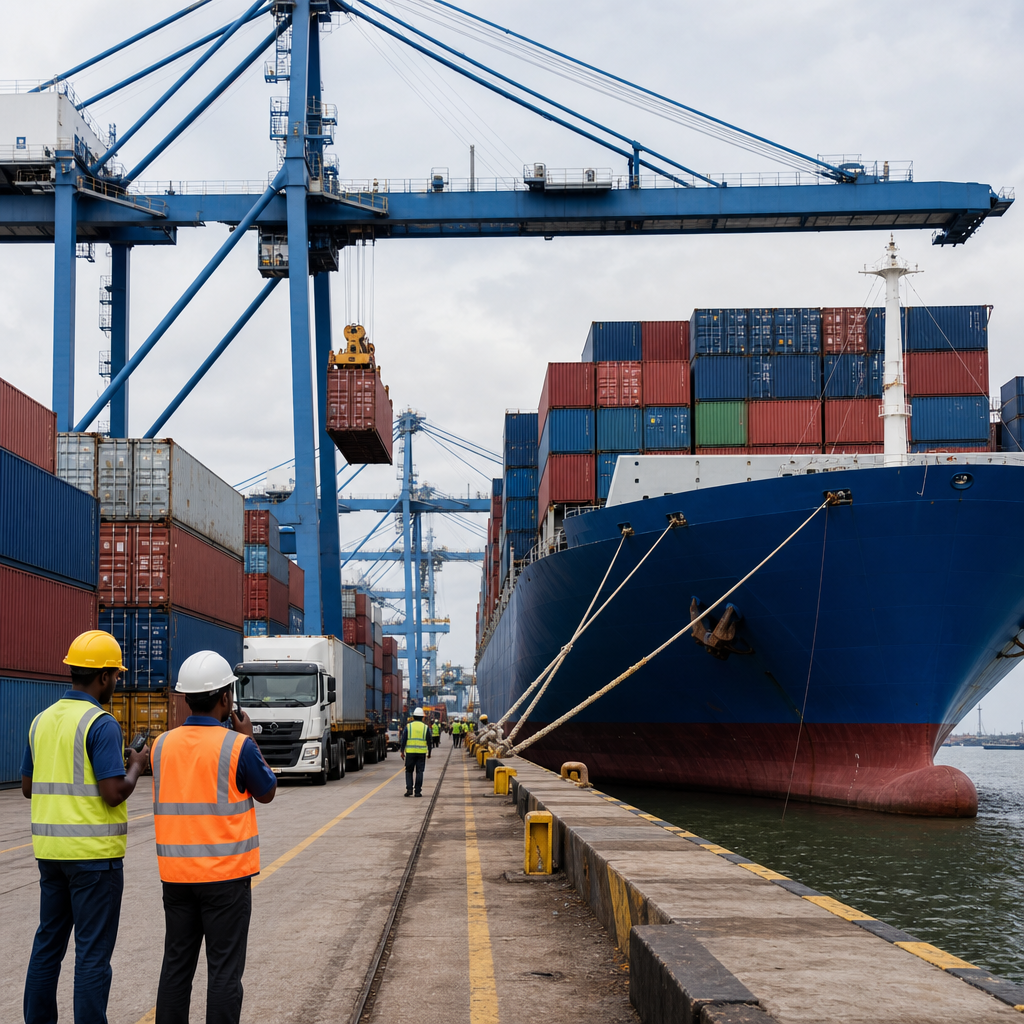
Sea freight is usually more efficient for larger volumes and cost-sensitive planning, but it requires stronger scheduling discipline because transit times are longer and port coordination can introduce complexity. Road freight plays a critical role for inland distribution and regional movement, especially where flexibility and final-route control matter most.

Businesses should review three questions before choosing: how urgent is the shipment, how sensitive is the landed cost, and what level of route flexibility is required? They should also think beyond the main leg of the trip. A sea shipment still requires coordinated inland transport and clearance planning. An air shipment may move quickly but still face downstream delays if warehouse readiness or document handling is weak.

The best freight choice is rarely made in isolation. It sits inside a broader logistics plan that includes customs timing, delivery commitments, and handling needs at both origin and destination. When freight decisions are tied to business priorities instead of habit, cargo movement becomes more predictable and cost control improves over time.

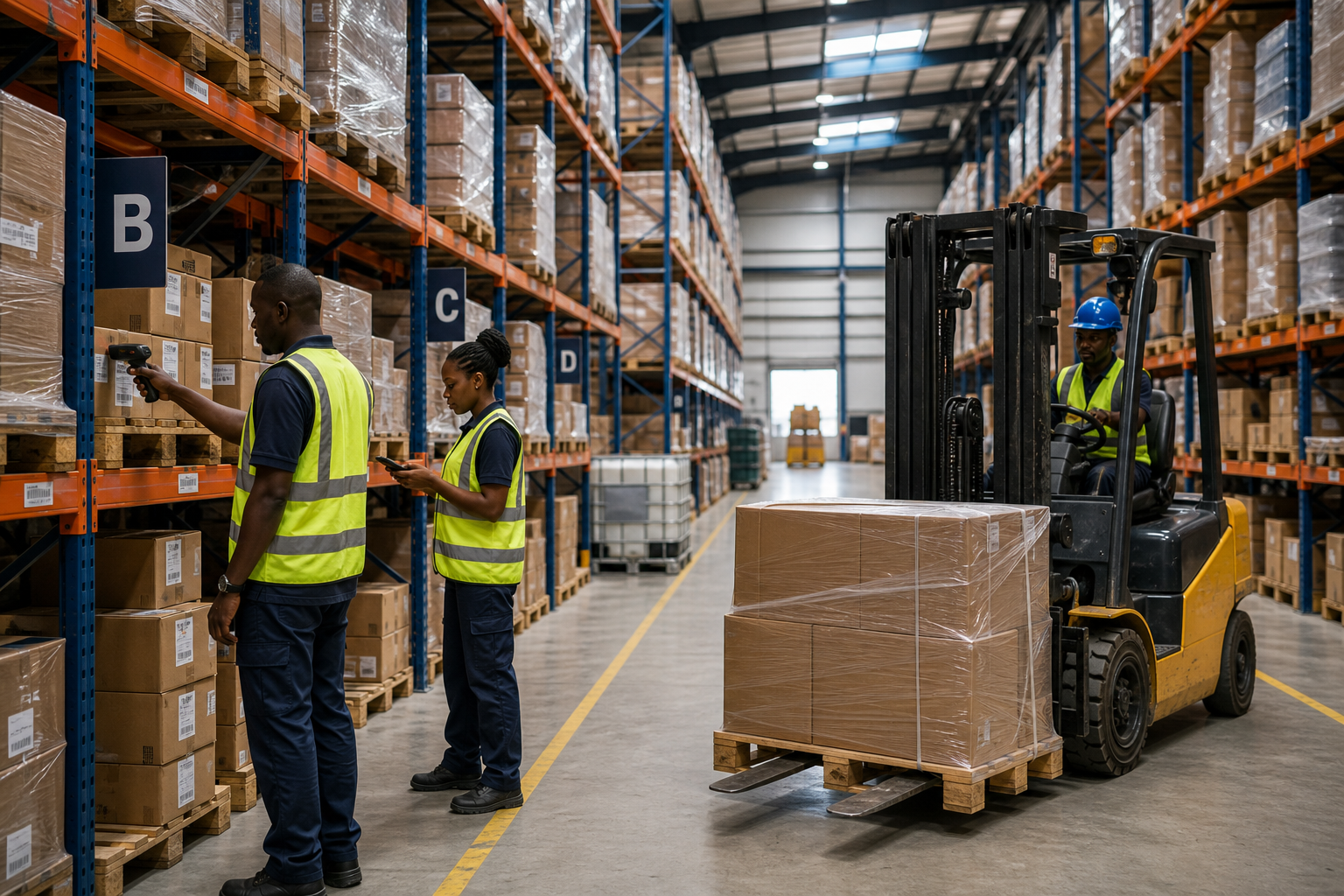
Warehouse operations and supply chain management

Why Warehousing Matters in a Reliable Supply Chain

How storage, staging, and dispatch planning help businesses improve flow and reduce downstream disruption.

Read full article

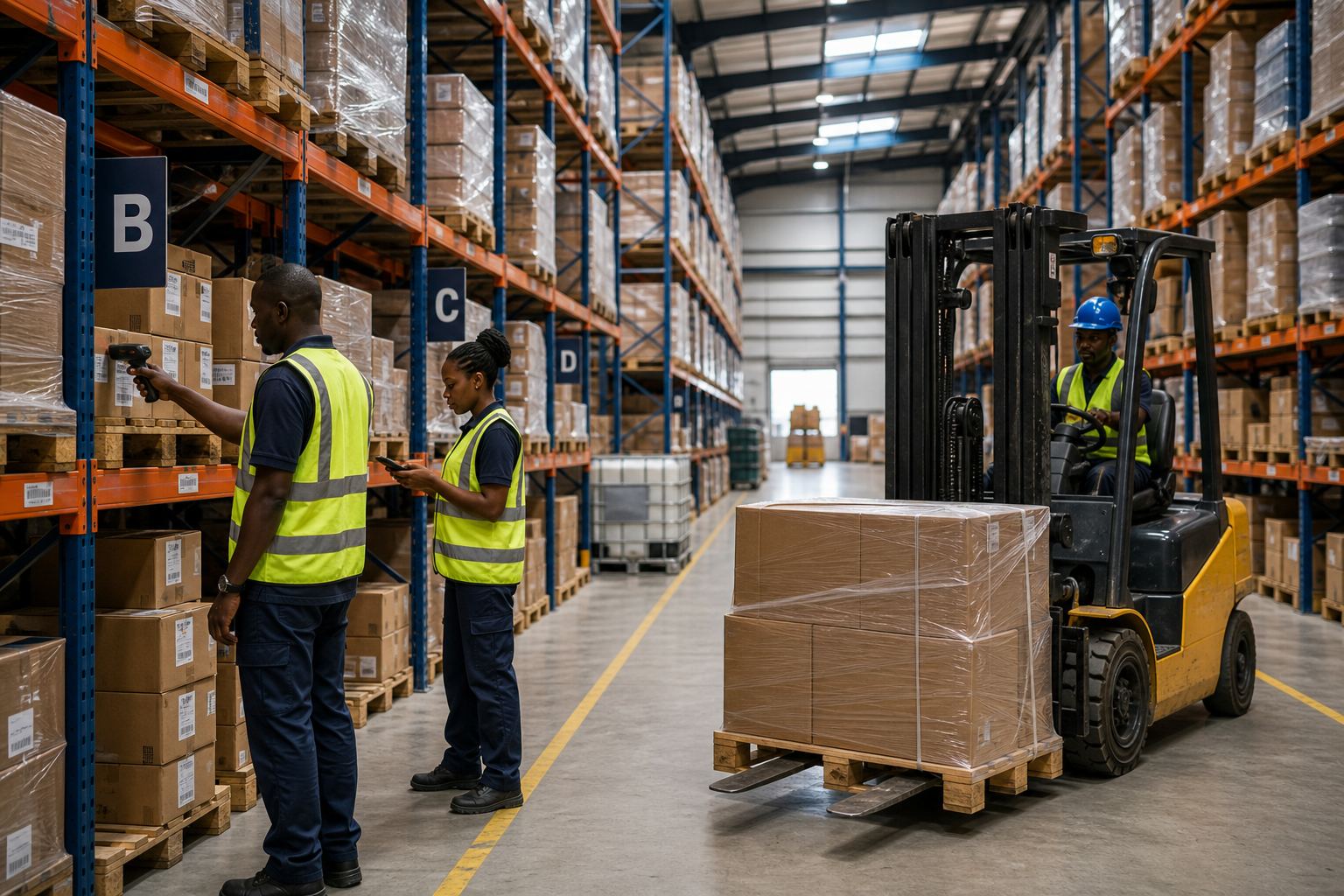
Warehousing is often misunderstood as a passive holding space, but in a strong logistics system it plays an active operational role. Storage creates flexibility between arrival and final delivery, gives businesses more control over timing, and reduces the pressure to move goods immediately under unfavorable conditions.

For companies handling multiple product lines, differing delivery windows, or staggered customer demand, warehousing becomes a balancing point that protects service quality. It allows teams to stage goods for dispatch, organize inventory for access, and prepare orders in a more controlled way instead of reacting to every movement in real time.

Warehousing also supports better risk management. Goods can be checked, sorted, and prepared before onward movement, which helps reduce mistakes in dispatch and supports clearer accountability. When linked well with transport planning, storage can smooth out congestion and improve route efficiency.

But warehousing only adds value when it is managed as part of the larger cargo flow. Businesses should think about dwell time, access speed, documentation visibility, and dispatch planning, not just square footage. The real value lies in using warehousing to improve timing and coordination. In practical terms, that means stock is easier to control, customer deliveries become easier to schedule, and the logistics chain becomes less vulnerable to sudden disruption. For growing businesses, warehousing is not just a physical asset; it is a decision-making advantage within the supply chain.

Customs valuation review

How URA Customs Valuation Works — And How to Avoid Disputes

Why the declared value on your invoice is not always the value URA accepts, and how to prepare for it.

Read full article

One of the most common sources of clearance delay for importers in Uganda is a valuation query from the Uganda Revenue Authority. The value you declare on your commercial invoice is not automatically accepted — URA verifies declared values against regional reference databases, historical imports of similar goods, and its own valuation guidelines. When the declared value appears low, a query is raised, and cargo cannot be released until the question is resolved.

URA primarily uses the transaction value method, which means the actual price paid or payable for the goods. However, the customs value is not just the invoice price. It also includes freight to the point of importation, insurance, and certain other costs incurred up to the border. This is known as the CIF value — cost, insurance, and freight. If any of these elements are missing from the declared value, URA will adjust upward.

The most reliable way to avoid valuation disputes is to prepare clear supporting evidence before lodgement. This includes the original commercial invoice, the contract or purchase order if one exists, the freight invoice, proof of payment (bank transfer, letter of credit), and any product specification sheets. For related-party transactions — where the buyer and seller are connected — URA may require additional evidence to confirm the price was negotiated at arm's length.

If a query is still raised, do not simply accept the first adjustment. You have the right to respond with documentation. A well-prepared value justification, including supplier correspondence, price lists, or comparable import data, often reduces or resolves the adjustment. Working with an experienced clearing team means these responses are prepared quickly and submitted in the format URA expects — which is usually the difference between a two-day delay and a two-week one.

ASYCUDA World customs system

ASYCUDA World: A Practical Guide for New Clearing Agents

The core steps every clearing agent needs to master in Uganda's customs declaration system.

Read full article

ASYCUDA World is the electronic system Uganda Revenue Authority uses for customs declarations. Every import and export entry in the country is lodged through it, and knowing the system well is the foundation of efficient clearing work. For new agents, the learning curve is steep but manageable once the core workflow is understood.

The process starts with registering the client and the goods. Each declaration requires accurate classification under the Harmonised System — the HS code determines duty rate, VAT, and any regulatory controls. Getting this code right is critical; an incorrect code can trigger a reclassification query, delay release, and in some cases attract penalties. It pays to double-check classification against the URA tariff before lodging.

Once classification is settled, the declaration is completed in ASYCUDA World with details of the consignee, the goods, the values, the transport, and any applicable exemptions. Supporting documents — invoices, packing lists, permits — are scanned and attached to the electronic file. The system then processes the assessment and returns a tax computation which must be paid before release is granted.

The last stage is release and delivery. Once duties are paid, ASYCUDA World generates the release order and the exit documentation, which allows the cargo to leave the port or ICD. Throughout, the system tracks the status of the declaration and any queries raised by customs officers. New agents who learn to interpret these status codes quickly become faster and more confident operators, and clients notice the difference.

East Africa freight corridor

Understanding Transit Bonds on the Mombasa–Kampala Corridor

How cargo moves from the Kenyan coast to Uganda under bond, and what can go wrong along the way.

Read full article

Cargo entering Uganda via the Port of Mombasa does not clear Kenyan customs in the traditional sense. Instead, it moves under a transit bond — a financial guarantee that the goods will leave Kenya for Uganda within a set period. This system allows cargo to pass through Kenya without paying Kenyan duties, but it also means there are strict rules that must be followed to avoid penalties.

The transit bond is secured by the clearing agent or the transporter and lodged with the Kenya Revenue Authority. Once accepted, the cargo is released from the port under a transit entry, which specifies the intended exit point — usually Malaba or Busia — and the maximum transit time. For the Mombasa to Malaba route, the standard transit time is typically 5 to 7 days, depending on the route and current conditions.

Any deviation from the specified route, delay beyond the transit time, or unauthorized stop along the way can trigger the bond. If the cargo does not exit Kenya within the required window, the bond is called, and the agent or transporter becomes liable for the full duty amount. This is why reputable clearing teams monitor transit cargo closely and coordinate with transporters to keep shipments on schedule.

On arrival at the border, the transit entry is terminated, and the cargo enters Ugandan jurisdiction under a fresh customs regime. From there, it moves to an inland container depot or bonded warehouse where the actual import clearance takes place. Understanding this two-country process — and the deadlines involved — is essential for anyone planning Mombasa-routed imports. Companies that work with an experienced clearing partner usually find the process runs smoothly. Companies that try to manage it independently often discover the cost of a bond default too late.

Customs broker vs in-house clearing

Customs Broker or In-House Clearing? A Cost and Risk Comparison

When it makes sense to hire a licensed clearing agent — and when it doesn't.

Read full article

Some importers assume that handling customs clearance in-house saves money. Others assume the opposite. In practice, the right answer depends on volume, cargo complexity, and internal capability. For most small and mid-sized importers in Uganda, working with a licensed clearing agent is the safer and more cost-effective option — but it is worth understanding why.

Clearing cargo requires a licensed agent under Uganda Revenue Authority regulations. If you do not hold an agent licence, you cannot lodge declarations in ASYCUDA World on your own behalf. This means "in-house" clearing still requires engaging a licensed individual, either as staff or as a consultant. In addition, ongoing tariff changes, HS code updates, and valuation adjustments require regular training that individual importers rarely invest in.

A good clearing agent brings more than just a licence. They bring relationships with customs officers, familiarity with current enforcement priorities, and quick access to the reference materials that resolve queries. When a valuation issue comes up at 4pm on a Friday, an experienced agent knows which supporting documents will resolve it and who to contact. An in-house team without that knowledge is more likely to see the cargo sit through the weekend.

For importers with very high volumes and consistent, simple cargo, there can be a case for building an internal customs team. But for most businesses moving mixed cargo, seasonal volumes, or unfamiliar goods, the value of a good clearing partner exceeds the cost. The right question is not "how much does a broker cost?" but "what is the total cost of delay, demurrage, and missed delivery — and how much of that does a good broker prevent?"

Cargo insurance

When to Insure Your Cargo — And When Not To

A practical look at cargo insurance decisions for importers and exporters in Uganda.

Read full article

Cargo insurance is often treated as an optional extra — something added at the last minute if the client asks. In reality, it is one of the most cost-effective forms of protection available to importers and exporters, and its absence becomes obvious at the worst possible moment. The question is not whether to insure, but how much coverage makes sense for each shipment.

Carrier liability is heavily limited by international convention. Under most ocean freight contracts, the carrier's liability for lost or damaged cargo is capped at a figure that rarely covers the true commercial value of the goods. Road and air carriers operate under similar limits. In practice, this means that if cargo is damaged in transit, the carrier's compensation will cover only a small fraction of your loss. Cargo insurance is designed to close that gap.

For high-value shipments — electronics, machinery, pharmaceuticals, specialized equipment — insurance is essentially non-negotiable. The premiums are typically a fraction of one percent of the cargo value, which is trivial compared to the potential loss. For lower-value or lower-risk shipments, self-insuring may be reasonable, especially when the shipment is short-haul, the goods are durable, and the packaging is reliable.

There is also a documentation benefit. When cargo is insured, the customs declaration must include the insurance cost as part of the CIF value. Some importers try to omit this to reduce duty, which creates valuation risk if URA discovers the gap. Properly declaring insurance keeps the customs file clean and avoids downstream penalties. On balance, for most importers, the question is not whether to insure — it is how much coverage and through which provider.

Import documentation mistakes

Common Mistakes in Import Documentation — and How to Fix Them

Seven recurring errors that delay customs clearance, and what to do differently next time.

Read full article

Most customs delays come from a small set of recurring documentation mistakes. Fixing them is not complex — but catching them requires discipline. Here are the errors we see most often, and how to prevent each.

1. Mismatched descriptions. The invoice says one thing, the packing list says another, and the bill of lading uses a third term. URA needs consistency to assess the goods correctly. Every document should describe the shipment identically.

2. Wrong HS code. Classification errors are the single most common cause of valuation disputes. A code that looks approximately right can still carry a different duty rate than the correct one. Classification should be verified against the current URA tariff before lodgement.

3. Missing permits. Some goods — food, pharmaceuticals, chemicals, used vehicles, telecommunications equipment — require prior approval from a ministry or regulator. Discovering this after the cargo arrives is expensive. The permit requirement should be confirmed before the shipment leaves origin.

4. Wrong consignee details. A misspelled company name, an incomplete TIN, or a wrong address can all trigger rework. Small errors on the invoice get copied through to every subsequent document.

5. Undervalued freight or insurance. If the freight cost on the invoice does not match the actual cost on the carrier's bill, URA will adjust the CIF value. The freight invoice should be provided as supporting evidence, and the numbers should match.

6. Missing proof of payment. For higher-value shipments, URA may require evidence that the declared transaction value was actually paid. Bank transfer receipts, letters of credit, or supplier confirmations should be ready.

7. Late submission. Documents that arrive after cargo reaches the port create pressure and increase demurrage risk. The best clearing operations receive complete documentation before the vessel sails. That is what separates a smooth clearance from an expensive one.

Ready to Move Your Cargo?

Contact us today for a personalized logistics consultation.

Get a Quote